Birth Control and Dental Health: What Hormonal Changes May Mean for Your Gums, Mouth, and Smile
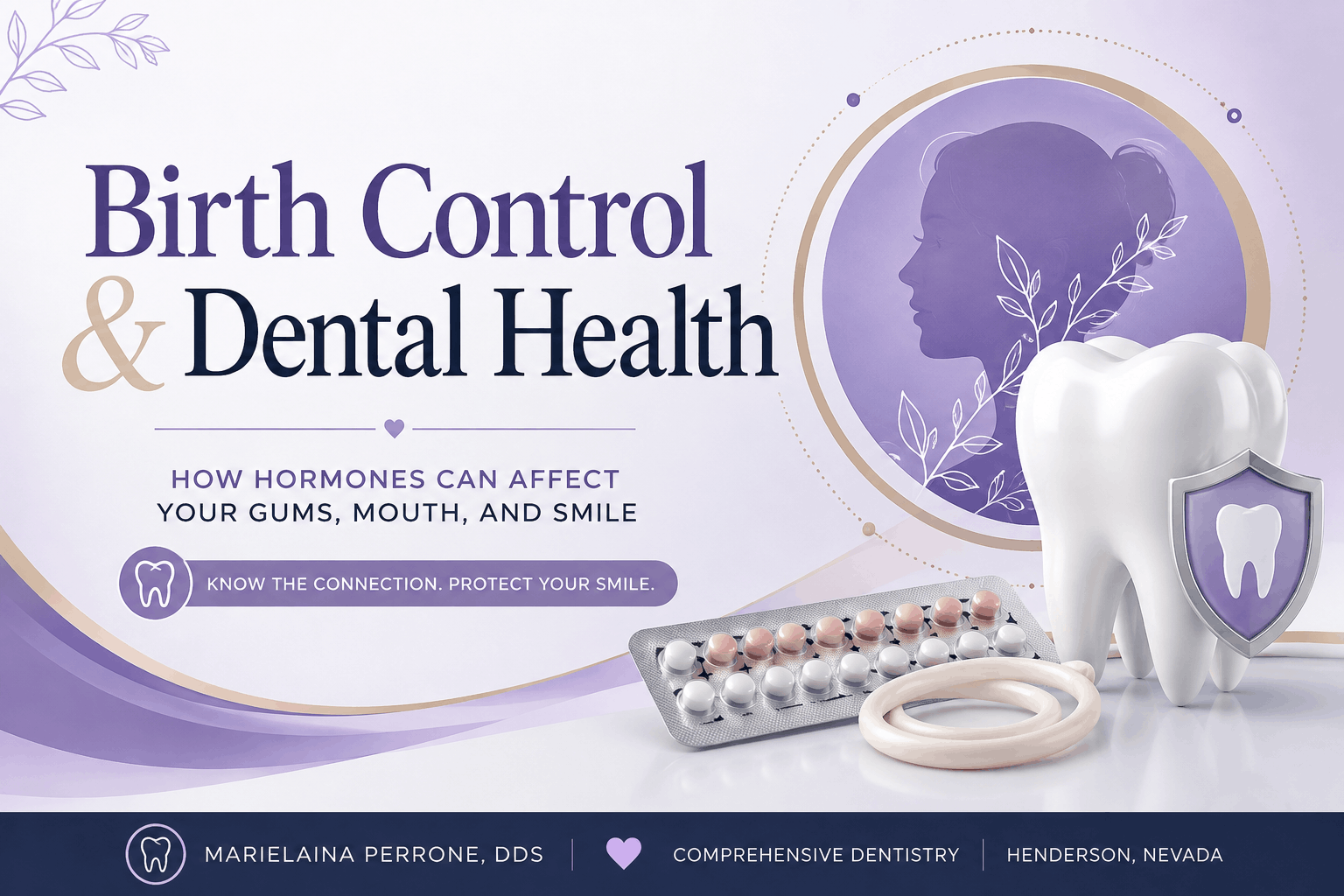
Birth control is rarely discussed during a dental appointment.
For many women, that makes sense. Oral contraceptives, hormonal IUDs, implants, injections, patches, and vaginal rings are prescribed for reproductive health not teeth.
But the mouth is not biologically isolated from the rest of the body.
Hormones can influence the way gum tissues respond to plaque and inflammation. Changes in estrogen and progesterone can affect blood vessels, inflammatory responses, saliva, and oral tissues. For some women, starting or changing hormonal birth control coincides with noticeable changes in their gums or mouth.
That does not mean birth control causes gum disease or damages teeth. The relationship is considerably more nuanced.
At her Henderson, Nevada dental practice, Marielaina Perrone, DDS, believes the more useful question is not whether birth control is “good” or “bad” for your teeth, but whether hormonal changes may alter the oral environment enough that certain patients need additional attention.
“Hormones don’t replace plaque and bacteria as the primary drivers of gingival inflammation, but they can influence how strongly the tissues respond. Two patients can have similar oral hygiene and very different levels of inflammation because biology matters too.”
— Marielaina Perrone, DDS
Understanding that distinction can help women recognize changes earlier without becoming unnecessarily concerned about medications that may be important to their overall health.
Is There Really a Connection Between Birth Control and Dental Health?
Yes, but it is easy to oversimplify.
The strongest historical concern involved oral contraceptives containing much higher hormone doses than most modern formulations. Earlier birth control pills could produce more pronounced gingival changes in some users.
Today’s hormonal contraceptives generally use substantially lower doses.
That means the dramatic gum responses described in older dental literature should not automatically be applied to every woman using modern contraception.
However, oral tissues contain receptors responsive to sex hormones, and hormonal fluctuations can modify inflammatory and vascular responses.
For susceptible patients, this may contribute to:
- Increased gum sensitivity
- Redness
- Swelling
- Bleeding during brushing or flossing
- Changes in inflammatory response to dental plaque
- Changes in saliva or dry-mouth symptoms in some individuals
The important distinction is this:
Hormonal birth control does not create dental plaque.
But hormonal influences may affect how the gum tissues react to plaque that is already present.
Can Birth Control Affect Your Dental Health?
Hormonal contraception does not automatically cause gum disease or cavities, but it can influence how oral tissues respond in some patients. Open each section to understand bleeding gums, dry mouth, dental procedures, antibiotics, dry socket risk, and when to talk with your dentist.
1. Is There Really a Connection Between Birth Control and Dental Health?Yes—but the relationship is more nuanced than many older articles suggest
Hormonal contraception can influence inflammatory and vascular responses in oral tissues. That may make some patients notice more gum sensitivity, swelling, or bleeding, especially when plaque is already present.
✓ Hormones can modify tissue response
✓ Plaque and bacteria remain central to gingival inflammation
✓ Modern contraceptives generally use lower hormone doses than older formulations
✓ Individual responses vary
“Hormones don’t replace plaque and bacteria as the primary drivers of gingival inflammation, but they can influence how strongly the tissues respond.”
— Marielaina Perrone, DDS
2. Does Birth Control Cause Gingivitis?Not by itself
Gingivitis is primarily driven by bacterial plaque. Hormonal changes may make gum tissues respond more intensely to that plaque, which can increase redness, puffiness, or bleeding in some patients.
✓ Plaque remains the main trigger
✓ Hormones may amplify inflammation
✓ Better plaque control often improves symptoms
✓ Persistent bleeding still deserves evaluation
3. Why Do Hormones Affect the Gums?Gum tissue is vascular, inflammatory, and biologically active
Estrogen and progesterone can influence blood flow, vascular permeability, immune signaling, collagen metabolism, and inflammatory response within the periodontal tissues.
✓ Blood flow can change
✓ Inflammatory response can change
✓ Tissue sensitivity may change
✓ Similar hormonal effects are seen during puberty, pregnancy, and menopause
4. What Can Birth-Control-Related Gum Changes Look Like?Bleeding, redness, swelling, or tenderness
Some patients notice that their gums become more reactive after starting or changing hormonal contraception.
✓ Bleeding during brushing or flossing
✓ Red or puffy gum tissue
✓ Increased tenderness
✓ Persistent inflammation
✓ These signs can have other causes too
5. Does Birth Control Cause Periodontal Disease?No single medication explains the entire disease process
Periodontitis is multifactorial and involves destructive loss of tooth-supporting tissues. Hormonal changes may influence inflammation, but they are only one part of a much larger risk picture.
✓ Plaque biofilm matters
✓ Genetics matter
✓ Smoking and diabetes matter
✓ Existing periodontal history matters
✓ Hormones may modify—not independently create—the risk
6. Why Does Your Periodontal History Matter?The same contraceptive can produce different oral responses in different patients
A patient with healthy gums and minimal plaque may notice no change, while someone with existing inflammation or periodontal risk may notice more bleeding or swelling.
✓ Existing gingivitis
✓ Previous periodontal disease
✓ Heavy plaque accumulation
✓ Smoking or diabetes
✓ Crowded areas that are difficult to clean
“If the tissues are healthy and stable, there may be nothing to change. If inflammation appears, we determine why rather than automatically blaming the medication.”
— Marielaina Perrone, DDS
7. Can Birth Control Cause Dry Mouth?Some patients notice dryness, but the relationship is not always straightforward
Persistent dry mouth should be mentioned to both your dentist and prescribing healthcare professional because saliva is important for comfort, acid buffering, and cavity prevention.
✓ Saliva protects teeth and tissues
✓ Dry mouth can increase cavity risk
✓ Many medications can contribute to oral dryness
✓ Persistent symptoms deserve evaluation
8. Does Birth Control Increase Cavity Risk?Not automatically
Cavities are influenced by bacteria, diet, saliva, fluoride exposure, oral hygiene, eating frequency, and tooth anatomy. Birth control by itself does not mean you will develop decay.
✓ Dry mouth can indirectly influence cavity risk
✓ Diet and plaque control remain important
✓ Fluoride exposure matters
✓ Individual risk is more useful than general assumptions
9. Do Different Types of Birth Control Affect the Mouth Differently?They differ in hormones, dose, and route of delivery
Birth control is not one medication. Oral pills, hormonal IUDs, implants, injections, patches, rings, and non-hormonal methods do not create identical hormonal exposure.
✓ Combination pills contain estrogen and progestin
✓ Progestin-only methods differ biologically
✓ Hormonal IUDs have different systemic exposure than pills
✓ Copper IUDs are non-hormonal
10. Should You Stop Birth Control Because Your Gums Bleed?No—not without guidance from the prescribing clinician
Bleeding gums should be evaluated rather than assumed to be caused solely by contraception.
⚠ Do not stop prescribed contraception on your own
⚠ Check for plaque, gingivitis, or periodontitis
⚠ Review other medications and health factors
⚠ Coordinate with the prescribing clinician when appropriate
11. Does Your Dentist Need to Know You Use Birth Control?Yes—it belongs on your medication list
An accurate medication history helps your dentist understand oral findings, possible interactions, healing considerations, and the broader medical context of your care.
✓ Include current contraceptives
✓ Mention recent formulation changes
✓ Include other prescription and OTC medications
✓ Update your dentist when your medication list changes
12. Do Dental Antibiotics Make Birth Control Ineffective?Most commonly used antibiotics do not—but important exceptions exist
The broad claim that every antibiotic cancels out hormonal contraception is not accurate. Rifampin and related rifamycin drugs are important exceptions because they can reduce contraceptive hormone levels.
✓ Most routine dental antibiotics do not have the same effect
✓ Rifampin-class drugs are an important exception
✓ Vomiting or severe diarrhea can affect oral-pill absorption
✓ Ask your prescribing clinician or pharmacist when uncertain
13. Does Birth Control Increase Dry Socket Risk?Research has suggested an association with estrogen-containing oral contraceptives
Some studies have reported a higher dry-socket risk in patients using estrogen-containing oral contraceptives after extraction. That does not mean every patient on birth control will develop dry socket.
✓ Smoking also influences risk
✓ Extraction difficulty matters
✓ Surgical trauma matters
✓ Previous dry socket may matter
✓ Tell your dentist or surgeon what contraception you use
14. Should Extractions Be Scheduled Around the Pill Cycle?Not as a universal rule
You may see recommendations online about timing extractions around the contraceptive cycle, but this is not a one-size-fits-all rule.
✓ Urgency matters
✓ Infection matters
✓ Surgical complexity matters
✓ Individual risk factors matter
15. Does Birth Control Affect Healing After Dental Treatment?For most healthy patients, routine healing is not dramatically altered
Healing depends on many factors beyond contraception, including smoking, diabetes, infection, surgical complexity, oral hygiene, immune status, and postoperative care.
✓ Smoking can impair healing
✓ Diabetes and infection can matter
✓ Surgical complexity matters
✓ Follow postoperative instructions carefully
16. Can Birth Control Cause TMJ Problems?The relationship is not simple enough to assume direct causation
Sex hormones have been studied in relation to pain perception and temporomandibular disorders, but TMJ problems are multifactorial.
✓ Bruxism and clenching matter
✓ Joint anatomy matters
✓ Stress and sleep can influence symptoms
✓ Timing after a medication change may be worth discussing
17. What About Mouth Sores?Hormonal changes may be one possible influence, but not the only one
Canker sores and other oral lesions can have many triggers, including trauma, stress, nutrition, immune factors, foods, hormones, and systemic conditions.
✓ Do not assume every sore is medication-related
✓ Persistent lesions deserve evaluation
✓ Oral sores lasting about two weeks or longer should be checked
18. What If Your Gums Change After Starting Birth Control?The timing is useful clinical information
If gum bleeding, puffiness, tenderness, or dryness begins after a medication change, tell your dentist what changed and when.
✓ Name of the contraceptive
✓ When it was started
✓ When oral symptoms began
✓ Any other medication or health changes
✓ Changes in oral hygiene or diet
19. What’s a Better Way to Think About Hormones and Oral Health?Bacteria create the challenge; biology influences the response
Hormones are best viewed as one factor that may influence how the gums respond to plaque rather than as a stand-alone cause of dental disease.
✓ Plaque provides the inflammatory challenge
✓ Immune response influences severity
✓ Hormones can modify that response
✓ Diagnosis should focus on what is actually happening in the mouth
20. What Can You Do to Protect Your Gums?Control the factors you can control
Excellent plaque control and regular dental care remain the most practical way to protect the gums regardless of hormonal status.
✓ Brush thoroughly twice daily
✓ Clean between the teeth
✓ Do not ignore persistent bleeding
✓ Maintain professional cleanings
✓ Avoid tobacco
✓ Mention persistent dry mouth
21. When Should You See a Dentist?Persistent changes deserve evaluation even when nothing hurts
Do not wait for severe pain before addressing periodontal or oral changes.
✓ Persistent gum bleeding
✓ Swollen or tender gums
✓ Gum recession
✓ Persistent bad breath
✓ Loose teeth or pus
✓ Persistent dry mouth or oral lesions
22. What Is the Most Important Takeaway?Birth control may influence oral tissues—but the diagnosis should guide treatment
Hormonal contraception does not automatically cause cavities, gum disease, or dental complications. It can, however, change the biological environment in which the gums and mouth respond.
✓ Do not stop medication without guidance
✓ Tell your dentist what contraception you use
✓ Monitor persistent changes
✓ Maintain excellent plaque control
✓ Treat what is actually present—not what is assumed
“The goal isn’t to make patients afraid of hormones or medications. It’s to recognize that oral health changes throughout life, and sometimes the mouth gives us useful information about what is happening elsewhere in the body.”
— Marielaina Perrone, DDS
Educational Note
This guide is educational and does not replace advice from your dentist, physician, pharmacist, or prescribing clinician. Do not stop or change prescribed birth control based solely on oral symptoms. Persistent bleeding, swelling, dry mouth, pain, or oral lesions should be professionally evaluated.
Birth Control Does Not Automatically Cause Gingivitis
This is one of the most important misconceptions to correct.
If a woman begins taking oral contraceptives and notices bleeding gums, it is tempting to conclude:
“The pill caused my gingivitis.”
That may not be the complete explanation.
Gingivitis develops primarily in response to bacterial plaque accumulating around the gumline. Hormonal changes may modify the inflammatory response, potentially making the gums appear more reactive.
Think of hormones as potentially changing the volume of the inflammatory response, rather than creating the bacterial trigger itself.
That is why excellent plaque control remains so important.
A woman experiencing hormonal changes may notice much more inflammation from plaque that previously produced few visible symptoms.
Why Do Hormones Affect the Gums?
Gum tissue is highly vascular and biologically active.
Estrogen and progesterone can influence:
- Blood flow within gingival tissues
- Vascular permeability
- Inflammatory signaling
- Immune responses
- Collagen metabolism
- Oral microbial ecology
These effects help explain why dental professionals see oral changes during several hormonally dynamic stages of life, including:
- Puberty
- Menstrual cycles
- Pregnancy
- Hormonal contraception
- Perimenopause
- Menopause
The mouth often reflects broader physiological changes occurring throughout the body.

What Can Birth-Control-Related Gum Changes Look Like?
When hormonal contraception contributes to an exaggerated gingival response, patients may notice:
Bleeding gums
The gums may bleed more easily when brushing or flossing.
Redness
Healthy gums generally appear firm and relatively pale pink, although normal pigmentation varies significantly between individuals.
Inflamed gums may become noticeably redder.
Swelling
The gum margins or tissue between teeth may appear puffy or enlarged.
Tenderness
Brushing and flossing may become temporarily uncomfortable.
Persistent inflammation
Gingivitis that previously seemed minor may become more noticeable.
None of these symptoms proves that birth control is responsible.
Bleeding and swollen gums can also result from plaque-induced gingivitis, periodontal disease, brushing habits, medication effects, systemic conditions, or other causes.
That is why persistent changes deserve a dental evaluation rather than self-diagnosis.
Does Birth Control Cause Periodontal Disease?
This requires an important distinction.
Gingivitis and periodontitis are not the same disease stage.
Gingivitis involves inflammation of the gum tissues without the destructive loss of supporting bone characteristic of periodontitis.
Periodontitis involves progressive destruction of the tissues supporting the teeth.
Hormonal changes may increase gingival inflammation in susceptible individuals, but it would be inaccurate to say that simply taking birth control inevitably causes periodontal disease.
Periodontitis is multifactorial.
Risk can be influenced by factors including:
- Bacterial biofilm
- Genetics
- Smoking
- Diabetes
- Existing periodontal history
- Oral hygiene
- Immune response
- Age
- Certain medications
- Other health and lifestyle factors
Hormonal influences are one piece of a much larger biological picture.
Why Your Periodontal History Matters
Two women can take the same contraceptive and have completely different oral experiences.
A patient with excellent periodontal health and minimal plaque may notice virtually no change.
Someone with:
- Existing gingivitis
- Previous periodontal disease
- Heavy plaque accumulation
- Infrequent professional cleanings
- Smoking history
- Diabetes
- Crowded teeth that are difficult to clean
may be more likely to notice inflammation.
This is one reason individualized dental care matters.
“I don’t treat a medication list in isolation. I look at what is actually happening in the patient’s mouth. If the tissues are healthy and stable, there may be nothing to change. If inflammation appears, we determine why rather than automatically blaming the medication.”
— Dr. Marielaina Perrone, DDS

Can Birth Control Cause Dry Mouth?
Some patients report changes in saliva or a sensation of dry mouth while using medications, including hormonal medications.
The relationship between contraceptives and clinically significant dry mouth is not as straightforward as the relationship seen with many medications known to reduce salivary flow.
Still, if you develop persistent dry mouth after starting or changing a medication, tell both your dentist and prescribing healthcare professional.
Saliva performs important functions.
It helps:
- Lubricate oral tissues
- Wash food debris from teeth
- Buffer acids
- Support remineralization
- Make chewing and swallowing easier
- Protect against tooth decay
Persistent dry mouth can increase susceptibility to cavities and oral discomfort regardless of its cause.
Birth Control, Saliva, and Cavity Risk
There is no good reason to assume that taking birth control means you will develop cavities.
Cavities are influenced by a combination of factors, including:
- Oral bacteria
- Sugar and carbohydrate exposure
- Saliva
- Fluoride exposure
- Oral hygiene
- Tooth anatomy
- Eating frequency
- Existing restorations
However, if a medication or hormonal change contributes to persistent dry mouth in an individual patient, the resulting decrease in salivary protection could indirectly influence cavity risk.
The practical message is simple:
Do not assume birth control causes decay but do pay attention to persistent changes in your mouth.
Does Birth Control Change the Oral Microbiome?
This is an evolving area of research.
Hormonal changes can influence biological environments throughout the body, and researchers have investigated whether sex hormones affect the composition or behavior of oral microorganisms.
The relationship is complicated.
Hormonal state, inflammation, plaque accumulation, diet, hygiene, genetics, medications, and numerous other variables can interact.
At this point, patients should be cautious about claims suggesting that a particular contraceptive will definitively create a specific “bad oral microbiome.”
The clinically useful approach remains much more practical:
Control plaque, monitor inflammation, and treat disease when it is present.

Do Different Types of Birth Control Affect the Mouth Differently?
Birth control is not one medication.
Available methods include:
- Combination oral contraceptive pills
- Progestin-only pills
- Hormonal IUDs
- Contraceptive implants
- Hormonal injections
- Transdermal patches
- Vaginal rings
- Non-hormonal copper IUDs
- Barrier methods
These methods differ in hormone type, dose, route of administration, and systemic exposure.
Therefore, it would be inaccurate to assume that every contraceptive has an identical effect on oral tissues.
Combination birth control pills
These contain estrogen and progestin and have historically received the greatest dental attention.
Modern formulations generally contain lower hormone doses than older oral contraceptives.
Progestin-only contraception
These methods do not contain estrogen. Individual tissue responses can vary, and oral effects should be evaluated based on actual symptoms rather than assumptions.
Hormonal IUDs
Hormonal IUDs release progestin primarily within the reproductive system, although some hormone enters systemic circulation.
They should not automatically be assumed to produce the same oral effects as an estrogen-containing oral contraceptive.
Copper IUD
The copper IUD is non-hormonal, so the hormonal mechanisms discussed in this article do not apply in the same way.
Should You Stop Birth Control Because Your Gums Bleed?
No—not on your own.
Bleeding gums are not a reason to independently discontinue prescribed contraception.
Instead, determine why the gums are bleeding.
A dental examination can evaluate:
- Plaque accumulation
- Gingivitis
- Periodontal pocketing
- Calculus
- Gum recession
- Existing periodontal disease
- Local irritation
- Other possible contributors
If medication appears relevant, your dentist can communicate with the clinician managing your contraceptive care when appropriate.
Medication decisions should be made with the prescribing healthcare professional.
Birth Control and Dental Procedures: Does Your Dentist Need to Know?
Yes.
Your dentist should have an accurate, current medication history—including birth control.
That does not mean contraceptive use will change every dental procedure.
It means your dentist should understand the medications you take when evaluating your overall health, oral findings, drug interactions, and treatment planning.
This is especially important when medications are being prescribed.
Birth Control and Antibiotics: An Important Myth to Clarify
For years, many women were told that all antibiotics make birth control pills ineffective.
That broad statement is not accurate.
Most commonly prescribed antibiotics have not been shown to meaningfully reduce the effectiveness of combined hormonal contraception.
However, rifampin and related rifamycin antibiotics can reduce contraceptive hormone levels and interfere with effectiveness because of their effects on liver enzymes.
These drugs are not among the antibiotics most routinely prescribed for ordinary dental infections.
There is another practical consideration: severe vomiting or diarrhea can interfere with absorption of oral contraceptive pills, regardless of what caused the gastrointestinal illness.
Because medications and individual circumstances vary, patients should follow the instructions supplied with their contraceptive and consult their prescribing clinician or pharmacist when there is a potential interaction.
Don’t simply assume every dental antibiotic cancels out birth control.
But don’t assume interactions are impossible either.

What About Antibiotics Prescribed After Dental Treatment?
Dentists today are increasingly selective about antibiotic prescribing.
Antibiotics are not automatically required for:
- Every toothache
- Every root canal
- Every extraction
- Every implant
- Every swollen gum
When antibiotics are clinically indicated, your dentist should know the medications you take.
If you use hormonal contraception, include it on your medication list.
Birth Control and Tooth Extraction: Is There a Dry Socket Connection?
This is one of the more interesting areas where contraception and dentistry intersect.
Some research has suggested an association between estrogen-containing oral contraceptives and an increased risk of alveolar osteitis, commonly known as dry socket, following tooth extraction—particularly wisdom tooth removal.
Dry socket occurs when normal early healing of the extraction socket is disrupted.
Symptoms often include:
- Significant pain several days after extraction
- Pain radiating toward the ear or jaw
- Bad taste
- Bad breath
- Increasing pain after initial improvement
The possible association has been attributed partly to estrogen’s influence on fibrinolytic activity, which may affect the stability of the blood clot.
However, this does not mean every woman taking birth control will develop dry socket.
Other factors may influence risk, including:
- Smoking
- Extraction difficulty
- Surgical trauma
- Previous dry socket
- Oral hygiene
- Postoperative behavior
If you use estrogen-containing contraception and are having a tooth extracted, simply make sure your dentist or oral surgeon knows.
Should Dental Extractions Be Scheduled Around the Birth Control Cycle?
You may encounter online recommendations suggesting that women taking oral contraceptives should schedule extractions during a particular part of the pill cycle.
The evidence is not strong enough to make this a universal rule for every patient.
Extraction timing involves many factors, including:
- Whether the tooth is infected
- Pain
- Urgency
- Surgical complexity
- Medical history
- Type of contraceptive
- Individual risk factors
A painful or infected tooth should not necessarily be left untreated merely to reach a theoretically preferable point in a contraceptive cycle.
Treatment decisions should be individualized.
Does Birth Control Affect Healing After Dental Treatment?
For most healthy patients, hormonal contraception does not mean routine dental treatment will heal poorly.
Healing is influenced by many factors:
- Smoking
- Diabetes
- Nutrition
- Surgical complexity
- Infection
- Oral hygiene
- Immune status
- Blood supply
- Postoperative care
Contraceptive use is simply one part of the patient’s overall medical picture.
If you have experienced unusual healing problems in the past, tell your dentist.
Can Birth Control Affect Your TMJ?
There has been scientific interest in the relationship between sex hormones, estrogen receptors, pain perception, and temporomandibular disorders.
However, TMJ disorders are complex and can involve:
- Joint anatomy
- Muscles
- Bruxism
- Clenching
- Trauma
- Occlusion
- Stress
- Sleep
- Pain-processing mechanisms
It would be an overstatement to tell a patient that birth control causes TMJ problems.
If jaw pain begins after a medication change, the timing may be worth discussing, but a complete evaluation is more useful than assuming a direct causal relationship.

Hormones and Mouth Sores
Women sometimes attribute canker sores or other oral lesions to hormonal changes.
Aphthous ulcers can have many potential triggers and associations, including:
- Minor trauma
- Stress
- Nutritional deficiencies
- Immune factors
- Certain foods
- Hormonal fluctuations
- Systemic conditions
Birth control should not automatically be blamed for every new mouth sore.
Any oral lesion that does not heal normally should be professionally evaluated.
As a practical rule, a sore, ulcer, red patch, white patch, or unexplained oral lesion persisting for roughly two weeks or longer deserves dental or medical evaluation.
What If Your Gums Change After Starting Birth Control?
Timing can provide useful information.
Suppose your gums were previously stable, you begin a new hormonal contraceptive, and several weeks later you notice:
- More bleeding
- Puffiness
- Tenderness
- Increased inflammation
That does not prove causation.
But it is useful clinical information.
Tell your dentist:
- Which contraceptive you started
- When you started it
- When symptoms began
- Whether the formulation recently changed
- Whether you take other medications
- Whether your oral hygiene or diet changed
Your dentist can then look for objective evidence of inflammation and periodontal disease.
A Better Way to Think About Hormones and Oral Health
The old way of discussing this subject was often too simplistic:
Hormones cause gum problems.
A better model is:
Bacteria provide the challenge.
Your immune system determines much of the response.
Hormones can modify that response.
That distinction matters.
It explains why one patient may have very little plaque and surprisingly inflamed gums while another has substantial plaque with less visible inflammation.
It also explains why hormonal changes can expose a weakness that was already present rather than independently creating disease.
Birth Control and Gum Disease: What You Can Control
You may not want—or medically be able—to change your contraceptive.
Fortunately, many of the most important periodontal risk factors are manageable.
Brush thoroughly twice daily
Use a soft-bristled toothbrush and fluoride toothpaste.
Pay particular attention to the gumline.
Clean between your teeth
A toothbrush cannot effectively clean every interproximal surface.
Depending on your anatomy and periodontal health, this may involve:
- Dental floss
- Interdental brushes
- Water flossing
- Other dentist-recommended devices
Don’t ignore bleeding
People sometimes stop flossing because their gums bleed.
If plaque-induced inflammation is the cause, avoiding the area allows more plaque to remain and can perpetuate the problem.
Persistent bleeding should be evaluated.
Maintain professional dental care
Professional cleanings remove hardened calculus that brushing and flossing cannot.
Your appropriate recall interval depends on your periodontal condition and risk.
Avoid tobacco
Smoking significantly increases periodontal risk and can also mask visible signs such as bleeding.
Pay attention to dry mouth
If your mouth feels persistently dry, mention it.
Strategies for managing dry mouth depend on the underlying cause.

When Should You See a Dentist?
Schedule an evaluation if you notice:
- Persistent gum bleeding
- Swollen or tender gums
- Gum recession
- Persistent bad breath
- Loose teeth
- Pus around the gums
- Tooth sensitivity that is worsening
- Persistent dry mouth
- New oral lesions
- Pain when chewing
- Changes in the way your teeth fit together
You do not need to wait until something hurts.
Periodontal disease can progress with surprisingly little discomfort.
Why This Matters Beyond Your Smile
The mouth is part of the body.
Hormonal health, medications, immune function, metabolism, inflammation, saliva, nutrition, and oral bacteria continually interact.
That is why an accurate dental health history should include more than cavities and previous dental procedures.
Your dentist should know about:
- Prescription medications
- Over-the-counter medications
- Hormonal medications
- Supplements
- Pregnancy
- Menopause
- Relevant medical conditions
- Medication changes
The goal is not to intrude into unrelated medical decisions.
It is to understand the biological context in which oral disease is occurring.
What Dr. Perrone Looks for Clinically
For a patient using hormonal birth control, the medication itself is not the diagnosis.
The examination matters more.
Dr. Perrone may evaluate:
- Gingival color and contour
- Bleeding on probing
- Periodontal pocket depths
- Gum recession
- Plaque accumulation
- Calculus
- Bone levels when radiographs are indicated
- Tooth mobility
- Salivary concerns
- Existing restorations
- Areas that are difficult to clean
The question becomes:
Are the tissues healthy and stable, or is there evidence that intervention is needed?
That approach avoids both extremes—ignoring a possible hormonal influence and unnecessarily blaming birth control for every oral symptom.
Frequently Asked Questions About Birth Control and Dental Health
Can birth control cause bleeding gums?
Hormonal contraception may influence gingival inflammatory responses in some women, potentially making gums more prone to redness, swelling, or bleeding in the presence of plaque. Persistent bleeding should still be evaluated for gingivitis or periodontal disease.
Does the pill cause gum disease?
It is more accurate to say that hormonal changes may modify the gums’ response to plaque. Birth control alone should not be viewed as the sole cause of periodontal disease.
Are modern birth control pills better for the gums than older pills?
Modern oral contraceptives generally contain lower hormone doses than early formulations, so historical reports of pronounced gingival effects may not accurately represent the experience of women using today’s products.
Can birth control cause dry mouth?
Some patients report oral dryness associated with medications or hormonal changes, but the relationship is not straightforward. Persistent dry mouth deserves evaluation because reduced saliva can increase oral health risks.
Do antibiotics from the dentist make birth control ineffective?
Most commonly used antibiotics have not been shown to significantly reduce the effectiveness of hormonal contraception. Rifampin and related rifamycin drugs are important exceptions. Always discuss potential interactions with the prescribing clinician or pharmacist.
Does birth control increase the risk of dry socket?
Research has suggested that estrogen-containing oral contraceptives may be associated with increased dry-socket risk after extraction in some patients. Many other factors also influence risk.
Should I stop taking birth control before a tooth extraction?
Do not stop prescribed contraception without guidance from the healthcare professional managing it. Tell your dentist or oral surgeon what you take so treatment can be planned appropriately.
Can an IUD affect dental health?
Hormonal and non-hormonal IUDs are different. A hormonal IUD produces hormonal exposure, while a copper IUD does not use hormones. There is no reason to assume that every IUD will produce clinically significant dental changes.
Should my dentist know that I take birth control?
Yes. Hormonal contraceptives are medications and should be included in your current medication history.
What should I do if my gums started bleeding after changing birth control?
Continue your prescribed medication unless your prescribing clinician tells you otherwise, maintain excellent oral hygiene, and schedule a dental evaluation if bleeding persists. The goal is to determine whether gingivitis, periodontal disease, hormonal response, or another factor is involved.
Birth Control and Dental Health: The Bottom Line
Birth control and oral health are connected—but not in the simplistic way many older articles suggest.
Hormonal contraception does not automatically cause cavities, periodontal disease, dry socket, or damaged teeth.
What hormones can do is alter the biological environment in which oral tissues respond.
For some women, that may mean:
more noticeable gum inflammation, changes in tissue sensitivity, possible salivary changes, or an altered risk profile surrounding certain dental procedures.
For many others, there may be no noticeable oral effect at all.
The most useful response is not fear and certainly not stopping medically necessary contraception without guidance.
It is awareness.
“The goal isn’t to make patients afraid of hormones or medications. It’s to recognize that oral health changes throughout life, and sometimes the mouth gives us useful information about what is happening elsewhere in the body.”
— Marielaina Perrone, DDS
If your gums begin bleeding, your mouth becomes persistently dry, or something changes after starting a new medication, mention it at your next dental visit.
Sometimes the solution is as straightforward as improving plaque control.
Sometimes periodontal treatment is needed.
And sometimes the change has little to do with birth control at all.
The diagnosis—not the assumption—should guide treatment.
Birth Control and Dental Health in Henderson, NV
At her Henderson, Nevada dental practice, Marielaina Perrone, DDS takes a comprehensive approach to women’s oral health, recognizing that medications, hormonal changes, periodontal health, restorative dentistry, lifestyle, and overall wellness can intersect.
Patients throughout Henderson, Green Valley, Anthem, Seven Hills, Inspirada, Las Vegas, Summerlin, and surrounding Southern Nevada communities can schedule a comprehensive dental and periodontal evaluation when experiencing changes in their oral health.
About Marielaina Perrone
Dr. Marielaina Perrone, DDS, is a trusted cosmetic and family dentist in Henderson, NV, known for helping patients achieve healthy, beautiful smiles through personalized, compassionate care. With more than 20 years of clinical experience, she combines advanced dental expertise with an artistic eye to deliver exceptional results in porcelain veneers, dental implants, smile makeovers, periodontal therapy, Botox, dermal fillers, and facial aesthetic treatments.
A graduate with honors from Stony Brook University School of Dental Medicine, Dr. Perrone remains committed to lifelong learning and regularly pursues advanced continuing education in cosmetic dentistry, implant dentistry, and facial aesthetics. Her comprehensive approach focuses on enhancing oral health, facial harmony, and overall confidence through customized treatment plans tailored to each patient’s unique goals.
Dr. Perrone is passionate about patient education, preventive care, and building lasting relationships founded on trust, communication, and comfort. She believes every patient deserves individualized attention and treatment that supports both long-term health and a confident smile.
Proudly serving Henderson, Green Valley, Las Vegas, Summerlin, and surrounding communities, Dr. Perrone is dedicated to providing modern, patient-centered dentistry in a welcoming environment. Outside the office, she enjoys cooking, staying active, spending time with family, and participating in community activities throughout the Las Vegas Valley.
Reviewed for Clinical Accuracy
Every article published on drperrone.com is personally written or clinically reviewed by Marielaina Perrone, DDS to ensure it reflects current evidence-based dentistry, modern treatment recommendations, and her philosophy that beautiful smiles are created through personalized care, facial harmony, and long-term oral health.
Last Reviewed: July 2026