What Is Peri-Implantitis? Understanding the Most Serious Threat to Dental Implants

Dental implants have transformed modern dentistry by providing a predictable, long-lasting solution for replacing missing teeth.
When properly planned, placed, and maintained, dental implants have excellent long-term success rates.
However, like natural teeth, implants are not immune to disease.
One of the most significant complications that can affect dental implants is peri-implantitis. A progressive inflammatory condition that can damage the bone supporting an implant and, if left untreated, eventually lead to implant failure.
The encouraging news is that peri-implantitis is often preventable, and when detected early, treatment is generally more successful.
At my Henderson, Nevada practice, I emphasize that receiving a dental implant is not the end of treatment—it’s the beginning of a lifelong partnership focused on maintaining excellent oral health.
“A dental implant doesn’t get cavities, but it still depends on healthy bone and healthy gums. Protecting those tissues is what keeps implants successful for decades.”
— Marielaina Perrone, DDS
What Is Peri-Implantitis?
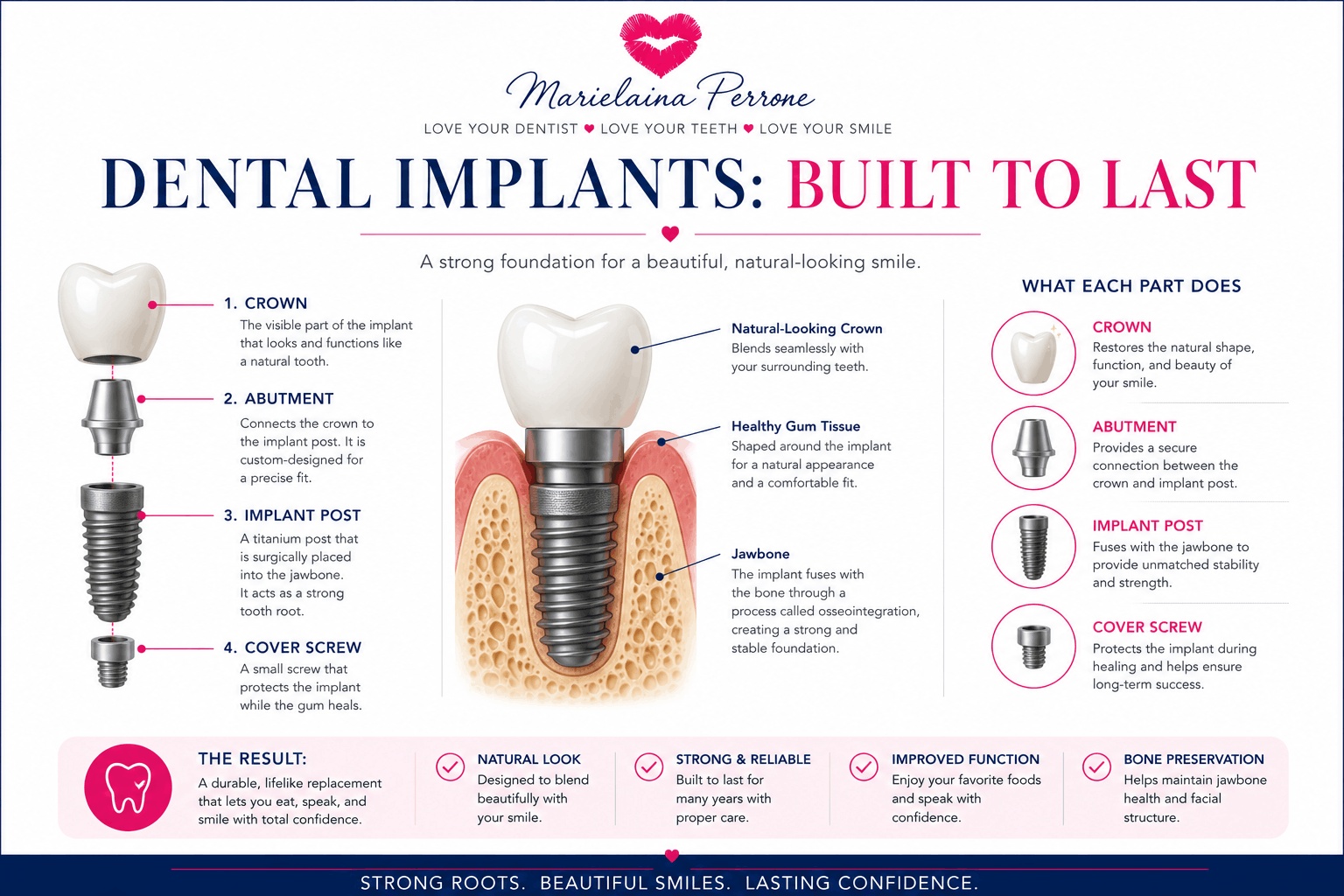
Peri-implantitis is an inflammatory disease that affects the tissues surrounding a dental implant.
It involves two major problems:
- Inflammation of the surrounding soft tissues
- Progressive loss of the supporting jawbone
As bone loss increases, the implant gradually loses the foundation that keeps it stable.
Without treatment, this process may eventually compromise the implant.
How Is Peri-Implantitis Different from Peri-Implant Mucositis?
Many patients have never heard these terms, but understanding the difference is important.
Peri-Implant Mucositis
This is the earliest stage.
Inflammation affects only the soft tissues around the implant.
Symptoms may include:
- Redness
- Swelling
- Bleeding during brushing
- Bleeding during professional examination
At this stage, bone loss has not yet occurred, making treatment much more predictable.
Peri-Implantitis
When inflammation progresses deeper, the supporting bone begins to deteriorate.
Now the condition becomes significantly more serious because the implant’s long-term stability may be threatened.
“Think of peri-implant mucositis as a warning sign. Peri-implantitis is what can happen when that warning goes unrecognized.”
— Dr. Marielaina Perrone, DDS
Why Does Peri-Implantitis Develop?
Peri-implantitis usually results from several contributing factors rather than a single cause.
Common risk factors include:
- Inadequate plaque control
- Previous periodontal disease
- Smoking
- Diabetes
- Poorly fitting restorations
- Excess cement around restorations
- Infrequent professional maintenance
- Heavy biting forces
- Bruxism (teeth grinding)
Many patients have more than one contributing factor.
Symptoms Patients May Notice
One challenge with peri-implantitis is that symptoms are often subtle.
Patients may notice:
- Bleeding around an implant
- Tender gums
- Swelling
- Persistent bad breath
- A bad taste
- Slight discomfort
- Pus around the implant
- A feeling that the implant “doesn’t feel right”
Pain is often absent during the early stages.

Signs Your Dentist Detects
Many implants with peri-implantitis are diagnosed during routine examinations before patients recognize any symptoms.
During your evaluation, we may identify:
- Bleeding during probing
- Increased probing depths
- Bone loss on digital X-rays
- Inflammation
- Suppuration (drainage)
- Changes in implant stability
- Plaque accumulation
- Occlusal overload
These findings help determine both the severity of the condition and the most appropriate treatment.
Why Bone Loss Matters
Unlike natural teeth, dental implants do not have a periodontal ligament.
Their stability depends almost entirely on direct contact with healthy bone.
As bone disappears:
- Implant support decreases
- Implant stability may weaken
- Cleaning becomes more difficult
- Future treatment becomes more complex
“Patients often notice the gums. I’m paying close attention to the bone underneath because that’s what ultimately determines the implant’s long-term success.”
— Dr. Marielaina Perrone, DDS
Who Is Most at Risk?
Certain patients require closer monitoring.
Higher-risk individuals include those who:
- Previously had periodontal disease
- Smoke or vape
- Have uncontrolled diabetes
- Have difficulty maintaining home care
- Miss regular maintenance visits
- Clench or grind their teeth
- Have multiple implants
Being at higher risk does not mean peri-implantitis is inevitable.
It simply means preventive care becomes even more important.

How Is Peri-Implantitis Diagnosed?
Diagnosis combines several pieces of information.
These may include:
- Clinical examination
- Digital X-rays
- Implant probing measurements
- Review of previous records
- Assessment of implant stability
- Evaluation of oral hygiene
- Medical history review
Comparing today’s findings with previous examinations often provides valuable information about disease progression.
Treatment Depends on Severity
There is no one-size-fits-all treatment.
The appropriate approach depends on how much inflammation and bone loss are present.
Treatment may include:
Professional Implant Cleaning
Specialized instruments remove bacterial deposits while protecting the implant surface.
Improved Home Care
Patients receive individualized instruction for cleaning around implants.
Antimicrobial Therapy
Localized antimicrobial treatments may help reduce bacterial levels in selected cases.
Occlusal Adjustment
Excessive biting forces may need correction to reduce stress on the implant.
Surgical Treatment
When significant bone loss has occurred, surgical access may be necessary to thoroughly clean the implant surface and, in carefully selected cases, perform regenerative procedures.
Prevention Is the Best Treatment
Fortunately, many cases of peri-implantitis can be prevented through consistent maintenance.
Healthy implant care includes:
- Brushing twice daily
- Cleaning around implants every day
- Regular professional maintenance visits
- Routine radiographic monitoring
- Avoiding tobacco products
- Managing systemic health conditions
- Wearing a nightguard if recommended
- Reporting changes promptly
Implants require the same commitment to oral health as natural teeth.
“One of the biggest misconceptions is that implants are maintenance-free. In reality, successful implants require lifelong care.”
— Dr. Marielaina Perrone, DDS

Don’t Ignore Early Bleeding
Patients often dismiss occasional bleeding around an implant.
Healthy tissues generally should not bleed during routine cleaning.
Persistent bleeding deserves professional evaluation because early intervention is usually much simpler than treating advanced peri-implantitis.
The Difference Is Personal
Every implant patient has unique risk factors.
Some have a history of periodontal disease.
Others have diabetes or heavy bite forces.
Some simply need additional guidance on home care.
That is why implant maintenance should always be individualized.
At my Henderson practice, I believe placing a dental implant is only the first step. Long-term success depends on regular monitoring, early diagnosis, and personalized preventive care that protects the health of both the implant and the surrounding bone.
Because the best implant is one that continues serving you comfortably for decades—not just years.
Frequently Asked Questions
Can dental implants become infected?
Yes. Although implants cannot develop cavities, the surrounding tissues can become inflamed and infected, leading to peri-implant disease.
Is peri-implantitis reversible?
Peri-implant mucositis, the earliest stage, is often reversible with prompt treatment and improved hygiene. Peri-implantitis involves bone loss and generally requires more advanced treatment to control the disease.
Does bleeding around an implant mean peri-implantitis?
Not always. Bleeding may indicate early inflammation (peri-implant mucositis), but it should always be evaluated to determine whether bone loss is present.
Can peri-implantitis cause implant failure?
Yes. If left untreated, progressive bone loss may eventually compromise the stability of the implant.
How often should dental implants be professionally checked?
Implants should be evaluated during regular dental examinations and maintenance visits. The recommended interval depends on your individual risk factors and oral health.
About Marielaina Perrone, DDS
Dr. Marielaina Perrone, DDS, is a trusted cosmetic and family dentist in Henderson, NV, known for helping patients achieve healthy, beautiful smiles through personalized, compassionate care. With more than 20 years of clinical experience, she combines advanced dental expertise with an artistic eye to deliver exceptional results in porcelain veneers, dental implants, smile makeovers, periodontal therapy, Botox, dermal fillers, and facial aesthetic treatments.
A graduate with honors from Stony Brook University School of Dental Medicine, Dr. Perrone remains committed to lifelong learning and regularly pursues advanced continuing education in cosmetic dentistry, implant dentistry, and facial aesthetics. Her comprehensive approach focuses on enhancing oral health, facial harmony, and overall confidence through customized treatment plans tailored to each patient’s unique goals.
Dr. Perrone is passionate about patient education, preventive care, and building lasting relationships founded on trust, communication, and comfort. She believes every patient deserves individualized attention and treatment that supports both long-term health and a confident smile.
Proudly serving Henderson, Green Valley, Las Vegas, Summerlin, and surrounding communities, Dr. Perrone is dedicated to providing modern, patient-centered dentistry in a welcoming environment. Outside the office, she enjoys cooking, staying active, spending time with family, and participating in community activities throughout the Las Vegas Valley.

Reviewed for Clinical Accuracy
This article has been written and clinically reviewed by Marielaina Perrone, DDS, to ensure it reflects current evidence-based dentistry and the personalized philosophy of care practiced at her Henderson, Nevada office.
Last Reviewed: August 2026