What Is Tooth Enamel Erosion? Understanding the Causes, Symptoms, Treatment, and Prevention

Tooth enamel is the hardest substance in the human body, even stronger than bone. Despite its remarkable strength, enamel is not indestructible. Daily exposure to acidic foods, beverages, stomach acid, and certain lifestyle habits can gradually wear away this protective outer layer in a process known as tooth enamel erosion.
Unlike a cavity, which results from bacterial decay, enamel erosion is caused by chemical dissolution of the tooth surface by acids. Because enamel cannot regenerate once it is lost, early recognition and prevention are essential for protecting your smile.
At Marielaina Perrone, DDS, in Henderson, Nevada, patient education plays an important role in preventing enamel erosion before it leads to sensitivity, cosmetic concerns, or costly restorative treatment.
What Is Tooth Enamel?
Enamel is the thin, translucent outer covering of every tooth. It serves as your teeth’s first line of defense by protecting the softer dentin and pulp beneath.
Healthy enamel helps your teeth:
- Resist daily chewing forces
- Protect against temperature changes
- Prevent tooth sensitivity
- Maintain their natural shape
- Support a bright, youthful appearance
- Reduce the risk of cavities
Although enamel is incredibly durable, it contains no living cells. Once enamel is worn away, your body cannot replace it naturally.
Is Your Tooth Enamel Wearing Away?
Tooth enamel erosion can develop slowly and may not become obvious until sensitivity, discoloration, or visible wear appears. Open each section to understand the causes, warning signs, treatment options, and ways to protect your enamel.
1. What Is Tooth Enamel?The protective outer layer of every tooth
Tooth enamel is the hard outer surface that protects the softer dentin and pulp beneath it. It helps teeth resist chewing forces, temperature changes, sensitivity, and decay.
✓ Hardest substance in the human body
✓ Protects the inner tooth structure
✓ Helps maintain tooth shape and color
✓ Cannot regenerate once it is lost
“Enamel is remarkably strong, but once it is lost, the body cannot replace it. Early recognition is one of the best ways to protect a smile.”
— Marielaina Perrone, DDS
2. What Is Tooth Enamel Erosion?Acids gradually dissolve the tooth surface
Enamel erosion is the gradual loss of mineralized tooth structure caused by repeated acid exposure. The acids soften the enamel surface, allowing small amounts of tooth structure to wear away over time.
✓ Usually develops gradually
✓ Can affect one tooth or many teeth
✓ Often exposes the yellow dentin beneath
✓ Is different from bacterial tooth decay
3. Which Foods and Drinks Can Erode Enamel?Frequency of acid exposure matters
Acidic foods and beverages can soften enamel. Sipping or snacking on them repeatedly throughout the day may be more damaging than consuming them occasionally with a meal.
✓ Soft drinks and diet sodas
✓ Sports and energy drinks
✓ Citrus fruits and lemon water
✓ Wine and fruit juice
✓ Sour candies and vinegar-based foods
4. Can Acid Reflux Damage Tooth Enamel?Stomach acid can be highly destructive
Gastroesophageal reflux disease can expose the teeth to stomach acid, particularly the inside surfaces of the upper teeth. Some patients do not realize they have nighttime reflux until erosion is noticed during an examination.
✓ Wear may be concentrated behind the upper teeth
✓ Nighttime reflux may occur without obvious heartburn
✓ Repeated vomiting can cause similar damage
✓ Medical evaluation may be important
5. Does Dry Mouth Increase the Risk?Saliva is a natural defense against acid
Saliva helps neutralize acids, wash away food particles, and return minerals to weakened enamel. When saliva flow decreases, acids remain on the teeth longer.
✓ Certain medications can reduce saliva
✓ Autoimmune conditions may cause dry mouth
✓ Dehydration and mouth breathing may contribute
✓ Frequent water intake may help
6. Can Brushing Make Erosion Worse?Softened enamel is easier to wear away
Brushing does not usually cause chemical erosion by itself, but aggressive brushing can remove enamel that has already been softened by acid exposure.
✓ Avoid brushing immediately after acidic foods
✓ Wait about 30 to 60 minutes
✓ Use a soft-bristled toothbrush
✓ Brush with gentle pressure
7. What Are the Early Signs of Enamel Erosion?The changes may be subtle at first
Enamel erosion often progresses slowly. Early symptoms may be easy to overlook until enough enamel has been lost to expose the underlying dentin.
✓ Sensitivity to cold, heat, or sweets
✓ Yellowing or darkening of the teeth
✓ Rounded tooth edges
✓ Smooth or shiny tooth surfaces
✓ Increased transparency near the edges
8. What Happens When Erosion Becomes Advanced?The teeth may become weaker and more vulnerable
As more enamel is lost, the teeth may become sensitive, shortened, chipped, or structurally weakened. Bite changes and cosmetic concerns may also develop.
⚠ Significant sensitivity
⚠ Chipped or cracked teeth
⚠ Shortened or flattened teeth
⚠ Increased risk of cavities
⚠ Need for more extensive restorations
9. How Is Enamel Erosion Diagnosed?Wear patterns can reveal the underlying cause
Dr. Perrone evaluates the tooth surfaces, wear patterns, bite, sensitivity, dietary habits, medical history, and signs of reflux or dry mouth before recommending treatment.
✓ Visual examination of tooth surfaces
✓ Review of diet and beverage habits
✓ Evaluation for grinding or clenching
✓ Assessment of reflux and dry mouth
✓ Digital X-rays when appropriate
10. Can Tooth Enamel Grow Back?Lost enamel cannot regenerate naturally
Enamel contains no living cells, so enamel that has been physically lost cannot grow back. Very early mineral loss may be strengthened before a visible defect develops.
✓ Fluoride can strengthen remaining enamel
✓ Saliva helps return minerals to weakened areas
✓ Early damage may be stabilized
✓ Structural loss may require restoration
11. How Is Mild Enamel Erosion Treated?Early treatment focuses on protection
When enamel loss is limited, treatment may focus on reducing acid exposure, strengthening the remaining enamel, and controlling sensitivity.
✓ Professional fluoride therapy
✓ Prescription fluoride toothpaste
✓ Desensitizing toothpaste
✓ Dietary and brushing changes
✓ Treatment of reflux or dry mouth
12. When Are Bonding, Veneers, or Crowns Needed?Restorations rebuild lost tooth structure
When erosion has changed tooth shape, color, strength, or comfort, restorative treatment may be recommended to protect the remaining structure and restore appearance.
✓ Bonding for minor wear or exposed dentin
✓ Veneers for visible front-tooth damage
✓ Crowns for severely weakened teeth
✓ Nightguards when grinding is present
13. How Can You Prevent Further Enamel Loss?Small daily changes can make a major difference
Reducing how often the teeth are exposed to acid is one of the most effective ways to prevent additional erosion.
✓ Limit frequent sipping of acidic drinks
✓ Drink water after acidic foods
✓ Wait before brushing after acid exposure
✓ Use fluoride toothpaste
✓ Stay hydrated and support saliva flow
✓ Address reflux, vomiting, or dry mouth
14. Should You Have Your Enamel Evaluated?Early diagnosis may prevent extensive treatment
An enamel evaluation may be appropriate if you notice sensitivity, yellowing, transparency, smooth tooth surfaces, chips, shortened teeth, or a change in your bite.
✓ New or increasing sensitivity
✓ Teeth that appear more yellow
✓ Rounded, thin, or transparent edges
✓ History of reflux or frequent vomiting
✓ Heavy consumption of acidic beverages
“The earlier enamel erosion is identified, the more opportunity we have to preserve natural tooth structure and avoid more extensive treatment.”
— Marielaina Perrone, DDS
Educational Note
This guide is educational and cannot diagnose tooth enamel erosion. A dental examination is needed to evaluate the extent of enamel loss, identify the cause, and determine whether preventive or restorative treatment is appropriate.
What Is Tooth Enamel Erosion?
Enamel erosion is the gradual loss of tooth enamel caused by repeated exposure to acids. These acids soften the enamel surface, allowing tiny amounts of mineralized tooth structure to dissolve over time.
As enamel becomes thinner, the underlying dentin begins to show through. Dentin has a naturally yellow color, which often makes affected teeth appear darker.
Unlike tooth decay, enamel erosion is not primarily caused by bacteria.
What Causes Tooth Enamel Erosion?
Many different factors can contribute to enamel loss.
Acidic Foods and Drinks
One of the most common causes is frequent exposure to dietary acids.
Examples include:
- Soft drinks
- Sports drinks
- Energy drinks
- Citrus fruits
- Lemon water
- Wine
- Tomatoes
- Vinegar-based dressings
- Sour candies
The more frequently teeth are exposed to acid throughout the day, the greater the risk of erosion.
Acid Reflux (GERD)
Patients with gastroesophageal reflux disease (GERD) often experience repeated exposure of the teeth to stomach acid.
Because stomach acid is extremely acidic, even occasional reflux can gradually dissolve enamel—especially on the inside surfaces of the upper teeth.
Some patients are unaware they have nighttime reflux until enamel damage is discovered during a dental examination.
Frequent Vomiting
Medical conditions involving repeated vomiting, including bulimia nervosa, chronic nausea, pregnancy-related vomiting, or gastrointestinal disorders, can significantly accelerate enamel erosion.
Repeated exposure to stomach acid may rapidly damage teeth if left untreated.
Dry Mouth
Saliva naturally helps neutralize acids and replace lost minerals.
When saliva production decreases, acid remains on the teeth longer.
Dry mouth may result from:
- Certain medications
- Autoimmune diseases
- Radiation therapy
- Aging
- Mouth breathing
- Dehydration

Aggressive Brushing
Although brushing itself does not cause enamel erosion, brushing aggressively after acid exposure can remove softened enamel.
Using a hard-bristled toothbrush or excessive force can worsen existing erosion.
Teeth Grinding
Grinding and clenching place tremendous mechanical stress on already weakened enamel.
Many patients experience both acid erosion and bruxism simultaneously, accelerating tooth wear.
Early Signs of Tooth Enamel Erosion
Recognizing the early warning signs allows treatment before significant damage occurs.
Common symptoms include:
- Tooth sensitivity
- Increased pain with cold foods
- Yellow discoloration
- Rounded tooth edges
- Smooth, shiny tooth surfaces
- Small surface depressions
- Increased transparency near front tooth edges
Because erosion progresses slowly, many patients do not notice changes until considerable enamel has already been lost.
Advanced Symptoms
As enamel continues to thin, patients may experience:
- Significant tooth sensitivity
- Chipped teeth
- Cracked enamel
- Shortened teeth
- Bite changes
- Increased cavity risk
- Cosmetic concerns
- Pain during eating
Without treatment, severe enamel loss may eventually require extensive restorative care.

How Dentists Diagnose Enamel Erosion
A comprehensive examination helps determine both the extent of enamel loss and its underlying cause.
Dr. Perrone may evaluate:
- Tooth shape
- Surface texture
- Wear patterns
- Bite relationship
- Areas of sensitivity
- Medical history
- Dietary habits
- Signs of acid reflux
- Salivary flow
- Digital X-rays when indicated
Early diagnosis often prevents extensive future treatment.
Can Tooth Enamel Grow Back?
Unfortunately, no.
Once enamel is lost, it cannot regenerate naturally because enamel contains no living cells.
However, early erosion can often be stabilized.
Although new enamel cannot be created, fluoride and saliva can help remineralize weakened areas before significant structural loss occurs.
Treatment Options for Enamel Erosion
Treatment depends on the severity of the damage.
Professional Fluoride Therapy
Prescription-strength fluoride helps strengthen remaining enamel while reducing sensitivity.
Many patients also benefit from fluoride toothpaste for long-term protection.
Desensitizing Products
Special toothpastes containing potassium nitrate or other desensitizing ingredients can reduce discomfort caused by exposed dentin.
Dental Bonding
When enamel loss causes cosmetic concerns or minor structural damage, tooth-colored composite resin can restore the original contour.
Bonding is conservative and often completed in one appointment.
Porcelain Veneers
Patients with moderate cosmetic damage affecting the front teeth may benefit from porcelain veneers.
Veneers restore:
- Shape
- Color
- Length
- Symmetry
- Smile aesthetics
They also protect remaining tooth structure.
Dental Crowns
When erosion has severely weakened a tooth, a full-coverage crown may provide the best long-term protection.
Crowns restore both function and appearance.
Nightguards
Patients who grind their teeth may benefit from a custom nightguard.
Protecting weakened enamel from grinding reduces additional damage.

Preventing Tooth Enamel Erosion
Prevention is always preferable to restoration.
Simple habits can dramatically reduce future enamel loss.
Limit Acid Exposure
Instead of sipping acidic beverages throughout the day, consume them during meals whenever possible.
Frequent acid exposure is more damaging than occasional exposure.
Drink Water After Acidic Foods
Rinsing with water helps dilute acids and restores a healthier oral environment.
Wait Before Brushing
After consuming acidic foods or beverages, wait approximately 30 to 60 minutes before brushing.
This allows saliva time to reharden softened enamel.
Use a Soft Toothbrush
A soft-bristled toothbrush with gentle pressure helps minimize unnecessary wear.
Choose Fluoride Toothpaste
Fluoride strengthens enamel and improves resistance to future acid attacks.
Stay Hydrated
Adequate saliva is one of your body’s best natural defenses.
Drink plenty of water throughout the day.
Treat Acid Reflux
If acid reflux is contributing to enamel loss, treating the underlying medical condition is essential for protecting your teeth.
Visit Your Dentist Regularly
Routine dental examinations often detect enamel erosion before patients notice symptoms.
Early intervention can prevent extensive restorative treatment later.
Foods That Help Protect Tooth Enamel
Some foods actually support enamel health.
Examples include:
- Cheese
- Yogurt
- Milk
- Leafy greens
- Almonds
- Salmon
- Eggs
- Water
- Crunchy vegetables
- Sugar-free gum containing xylitol
These foods promote saliva production, provide important minerals, or help neutralize acids.
Why Early Treatment Matters
Because enamel cannot regenerate, delaying treatment allows damage to progress.
Early intervention may prevent:
- Chronic sensitivity
- Cosmetic changes
- Tooth fractures
- Extensive restorations
- Root canal treatment
- Tooth loss
Protecting enamel today often preserves natural teeth for decades.

Frequently Asked Questions
Can enamel erosion be reversed?
Lost enamel cannot regenerate. However, early mineral loss may be stabilized through fluoride, saliva, and improved oral hygiene before permanent damage develops.
Is enamel erosion the same as tooth decay?
No. Tooth decay is caused primarily by bacteria producing acids from sugars, while enamel erosion results from direct chemical exposure to acids from foods, beverages, or stomach acid.
What is the first sign of enamel erosion?
Many patients first notice increased tooth sensitivity or slight yellowing of the teeth as the underlying dentin becomes more visible.
Can whitening damage eroded teeth?
Professional whitening is generally safe when supervised by a dentist, but patients with significant enamel erosion may experience increased sensitivity. A dental evaluation should always come first.
Which drinks cause the most enamel erosion?
Soft drinks, energy drinks, sports drinks, citrus juices, wine, and beverages consumed frequently throughout the day present the greatest risk.
Is enamel erosion permanent?
Yes. Once enamel has been lost, it cannot naturally grow back. The goal of treatment is to stop progression, strengthen the remaining tooth structure, and restore damaged areas when necessary.
Protect Your Smile Before Enamel Is Lost
Your enamel protects every bite, every smile, and every conversation. Once it is gone, it cannot be replaced naturally. Fortunately, early diagnosis and preventive care can slow or stop enamel erosion before significant damage occurs.
At Marielaina Perrone, DDS, every examination includes careful evaluation of tooth wear, enamel health, bite function, and lifestyle factors that may contribute to erosion. Whether you need preventive care, fluoride therapy, cosmetic bonding, veneers, or restorative treatment, the goal is always to preserve your natural teeth while creating a healthy, confident smile.
If you have noticed increasing tooth sensitivity, yellowing teeth, or signs of tooth wear, schedule a comprehensive evaluation with Dr. Marielaina Perrone in Henderson, NV, to protect your smile for years to come.
About Marielaina Perrone, DDS
Dr. Marielaina Perrone, DDS, is a trusted cosmetic and family dentist in Henderson, NV, known for helping patients achieve healthy, beautiful smiles through personalized, compassionate care. With more than 20 years of clinical experience, she combines advanced dental expertise with an artistic eye to deliver exceptional results in porcelain veneers, dental implants, smile makeovers, periodontal therapy, Botox, dermal fillers, and facial aesthetic treatments.
A graduate with honors from Stony Brook University School of Dental Medicine, Dr. Perrone remains committed to lifelong learning and regularly pursues advanced continuing education in cosmetic dentistry, implant dentistry, and facial aesthetics. Her comprehensive approach focuses on enhancing oral health, facial harmony, and overall confidence through customized treatment plans tailored to each patient’s unique goals.
Dr. Perrone is passionate about patient education, preventive care, and building lasting relationships founded on trust, communication, and comfort. She believes every patient deserves individualized attention and treatment that supports both long-term health and a confident smile.
Proudly serving Henderson, Green Valley, Las Vegas, Summerlin, and surrounding communities, Dr. Perrone is dedicated to providing modern, patient-centered dentistry in a welcoming environment. Outside the office, she enjoys cooking, staying active, spending time with family, and participating in community activities throughout the Las Vegas Valley.
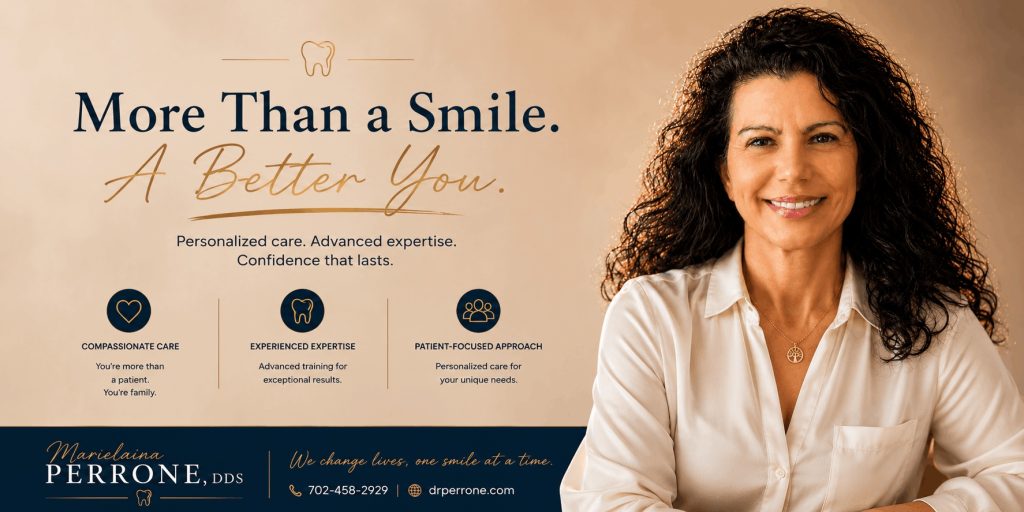
Reviewed for Clinical Accuracy
This article has been written and clinically reviewed by Marielaina Perrone, DDS, to ensure it reflects current evidence-based dentistry and the personalized philosophy of care practiced at her Henderson, Nevada office.
Last Reviewed: July 2026