Beyond Bone Health: Tymlos in Dental Care
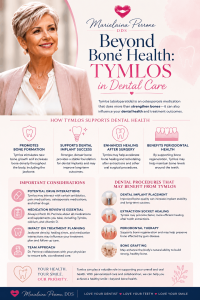
Tymlos (abaloparatide) is a medication primarily used to treat osteoporosis in postmenopausal women at high risk for fracture. While its main focus is on bone health, its effects on bone metabolism and potential side effects can affect dental care. Understanding these connections is vital for both patients and dental healthcare providers.
The Role of Tymlos in Bone Health
Tymlos belongs to a class of medications known as parathyroid hormone-related protein (PTHrP) analogs. It works by stimulating bone formation, increasing bone density, and reducing the risk of fractures in individuals with osteoporosis. Tymlos helps strengthen bones and improve overall skeletal health by promoting bone remodeling.
Tymlos and Dental Considerations
While Tymlos primarily targets systemic bone health, its effects can extend to the jawbone and dental structures. Dentists need to be aware of several key considerations when treating patients who are taking Tymlos:
Potential Impact on Jawbone Density: Since Tymlos promotes bone formation and density throughout the body, including the jawbone, patients taking this medication may have denser jawbone tissue. This can influence treatment decisions for dental implant placement, where adequate bone density is crucial for long-term success.

Healing Following Dental Surgery: Tymlos may affect the rate of bone healing and remodeling following dental surgery such as tooth extractions or periodontal procedures. Dentists should consider this factor when planning treatment and managing follow-up care for patients on Tymlos.
Interactions with Dental Medications: Tymlos may interact with other medications commonly prescribed in dental practice, such as antibiotics or analgesics. Dentists should review patients’ medication histories and consider potential drug interactions when prescribing medications or planning dental procedures.
What are the potential drug interactions of Tymlos with other dental medications?
Tymlos (abaloparatide) may interact with other dental medications, leading to adverse effects or reduced efficacy. Some potential drug interactions of Tymlos with other dental medications include:
Antibiotics:
Certain antibiotics, such as tetracyclines, may interact with Tymlos by impairing its absorption or efficacy. Tymlos patients should inform Dr. Perrone about ongoing antibiotic therapy to assess potential interactions and adjust treatment as necessary.
What Should Dental Patients Taking Tymlos® Know?
Tymlos® supports bone formation for osteoporosis, but it can also influence dental treatment planning. Open each section to learn how it may affect implants, extractions, healing, and communication with your healthcare team.
1. What Is Tymlos®?A medication that stimulates new bone formation.
Tymlos® (abaloparatide) is prescribed for people at high risk of fracture. It works differently from antiresorptive osteoporosis medications by stimulating bone formation.
✓ Supports bone remodeling
✓ Treats osteoporosis
✓ May influence jawbone healing
“Your dentist should know about every medication you take before treatment.”
— Marielaina Perrone, DDS
2. Why Does Your Dentist Need to Know?Medical history influences treatment.
Knowledge of Tymlos® helps your dentist coordinate care, plan surgery appropriately, and communicate with your physician when necessary.
✓ Update medication list
✓ Discuss recent fractures
✓ Coordinate with physician if needed
3. Can You Receive Dental Implants?Often yes, after evaluation.
Many patients taking Tymlos® remain candidates for implants. Bone quality, medical history, and overall oral health determine the best approach.
✓ Bone density assessment
✓ 3D imaging when indicated
✓ Personalized treatment planning
4. Does Tymlos® Affect Healing?Bone remodeling may influence recovery.
Healing after extractions, periodontal procedures, bone grafting, or implant placement should be monitored individually.
✓ Extraction sockets
✓ Bone grafts
✓ Implant healing
✓ Periodontal surgery
5. What About Gum Disease?Healthy gums remain essential.
Tymlos® supports bone metabolism but does not replace periodontal treatment. Infection control and maintenance remain the foundation of care.
✓ Professional cleanings
✓ Scaling and root planing
✓ Periodontal maintenance
6. Are Medication Interactions Important?Always review your medications.
Bring an updated medication list including osteoporosis medicines, calcium, vitamin D, antibiotics, and pain medications so your dentist can review potential interactions.
✓ Calcium & vitamin D
✓ Other osteoporosis medications
✓ Prescription and OTC drugs
7. Is Tymlos® the Same as Bisphosphonates?No—different mechanism, different considerations.
Tymlos® works differently than medications such as alendronate. Your dentist considers your complete medication history before invasive treatment.
✓ Different mechanism
✓ Different dental considerations
✓ Individual risk assessment
8. What Should You Do Before Your Appointment?Preparation improves safety.
Bring your medication list, share recent health changes, and ask questions about how your medical history affects dental care.
✓ Medication list
✓ Medical updates
✓ Questions encouraged
Educational Note
This guide is educational only and should not replace advice from your physician or dentist. Never stop Tymlos® without consulting the prescribing healthcare professional.
Nonsteroidal Anti-Inflammatory Drugs (NSAIDs):
NSAIDs like ibuprofen or naproxen are commonly prescribed for pain management in dental procedures. While there is no known direct interaction between Tymlos and NSAIDs, caution should be exercised, especially in patients at risk of gastrointestinal complications or renal impairment.
Analgesics:
Opioid analgesics, such as codeine or hydrocodone, may be prescribed for postoperative pain control in dental surgery. While there are no specific interactions reported between Tymlos and opioids, patients should be monitored for potential additive effects on bone metabolism and adverse reactions.
Anesthetics:
Local anesthetics, such as lidocaine or articaine, are routinely used in dental procedures to achieve anesthesia. There are no known interactions between Tymlos and local anesthetics. However, patients should inform Dr. Perrone about all their medications to ensure safe and effective anesthesia administration.
Bone Modifying Agents:
Some dental medications, such as bisphosphonates (e.g., alendronate, risedronate), are also used to treat osteoporosis or other bone-related conditions. Concurrent use of Tymlos with bisphosphonates may affect bone metabolism and increase the risk of adverse effects, including jaw osteonecrosis (ONJ). Therefore, careful monitoring and coordination between Dr. Perrone and medical providers are essential when managing patients receiving Tymlos and bisphosphonates.
Calcium and Vitamin D Supplements:
Calcium and vitamin D supplements are often recommended for individuals with osteoporosis to support bone health. While there are no direct interactions between Tymlos and calcium/vitamin D supplements, patients should ensure adequate intake of these nutrients as part of their overall osteoporosis management plan.

While Tymlos is not directly involved in dental procedures, its role in managing osteoporosis can indirectly impact dental care, especially in patients undergoing certain dental procedures or interventions. Here are some scenarios where Tymlos may be helpful in the context of dental care:
Dental Implant Placement:
Patients with osteoporosis may have compromised bone density, which can affect the success and stability of dental implant placement. Tymlos, by promoting bone formation and increasing bone density, may improve the outcome of dental implant procedures in these individuals. Enhanced bone quality can provide better support for dental implants, reducing the risk of implant failure and improving long-term success rates.
Extraction Socket Healing:
Following tooth extraction, particularly in individuals with osteoporosis, delayed or impaired extraction socket healing may occur due to reduced bone turnover and healing capacity. Tymlos can accelerate bone healing and remodeling processes, promoting faster and more efficient socket healing after tooth extraction. This can reduce the risk of complications such as alveolar bone resorption and facilitate subsequent dental implant placement or prosthetic restoration.
Periodontal Disease and Osteonecrosis of The Jaw
Periodontal disease, characterized by inflammation and bone loss around the teeth, can lead to significant oral health complications if left untreated. Osteonecrosis, a condition where bone tissue dies due to poor blood supply, is a severe consequence of advanced periodontal disease.
Tymlos has shown promising benefits in addressing bone loss associated with periodontal disease and preventing osteonecrosis. By promoting bone formation and density, Tymlos helps strengthen the jawbone, reducing the risk of tooth loss and improving overall oral health.
Studies have indicated that Tymlos, when used as an adjunct therapy to conventional periodontal treatments such as scaling and root planing, can enhance the outcomes of periodontal therapy. By stimulating bone regeneration and minimizing bone resorption, Tymlos supports the long-term stability of teeth and dental implants in individuals with periodontal disease.
Furthermore, Tymlos may also play a role in preventing osteonecrosis of the jaw (ONJ), a rare but serious complication associated with certain dental procedures and medications. By improving bone quality and vascularity, Tymlos reduces the likelihood of jawbone complications following dental surgeries or invasive procedures in patients with periodontal disease.
However, further research is needed to elucidate the optimal dosing regimen and long-term efficacy of Tymlos in the context of periodontal therapy.
Patients with osteoporosis may experience progressive alveolar bone loss and periodontal tissue breakdown, leading to periodontal disease and tooth mobility. Tymlos, by stimulating bone formation and enhancing bone density, may help stabilize periodontal tissues and support the outcomes of periodontal surgical procedures, such as osseous surgery or guided tissue regeneration. Improved bone quality can enhance periodontal attachment and reduce the risk of further bone loss in patients with osteoporosis-related periodontal issues.
Orthodontic Treatment:
In individuals with osteoporosis, compromised bone density and quality can pose challenges during orthodontic treatment, particularly in adult patients requiring orthodontic tooth movement. Tymlos therapy may improve bone density and strength, facilitating orthodontic tooth movement and reducing the risk of root resorption or other orthodontic complications associated with poor bone quality. Orthodontic treatment in Tymlos patients should be carefully monitored to ensure optimal outcomes and minimize potential risks.
Maxillofacial Reconstruction:
Patients undergoing maxillofacial reconstruction procedures, such as bone grafting or orthognathic surgery, may benefit from Tymlos therapy to enhance bone regeneration and remodeling. Tymlos can aid in augmenting bone volume and quality at surgical sites, improving the success and stability of reconstructive procedures, and optimizing functional and aesthetic outcomes.
Patient Education and Collaboration
Effective communication between patients, dentists, and primary care physicians is essential to ensure comprehensive personalized care for individuals taking Tymlos. Patients should be educated about the potential dental implications of Tymlos therapy and advised to inform Dr. Perrone about their medication regimen.
Conclusion
Tymlos medication is crucial in managing osteoporosis and improving bone health in postmenopausal women. However, its effects on bone metabolism and potential implications for dental care should be noticed. Dental professionals must be aware of these considerations when treating patients on Tymlos to provide safe and effective dental treatment while minimizing the risk of complications. Collaborative efforts between patients, dentists, and healthcare providers are key to addressing the dental needs of individuals receiving Tymlos therapy and ensuring optimal oral health outcomes.
Continue Exploring With Dr. Perrone
Oral health is connected to your overall health, comfort, confidence, and quality of life.
Explore Dr. Perrone’s philosophy, comprehensive approach to care, and educational resources
designed to help you make informed decisions about your smile.
Meet Dr. Perrone
Learn more about Marielaina Perrone, DDS, her clinical experience, treatment philosophy,
and personalized approach to dentistry in Henderson, Nevada.
Explore Comprehensive Dental Care
From preventive and periodontal care to restorative and cosmetic dentistry,
Dr. Perrone develops treatment plans around the individual patient—not a one-size-fits-all formula.
Continue Learning
Explore more evidence-informed articles about oral health, whole-body wellness,
prevention, healthy aging, cosmetic dentistry, and emerging dental science.
Have a Question About Your Own Oral Health?
Educational information can help you understand a condition, but it cannot replace
an individualized dental examination. If you have a concern about your teeth, gums,
smile, or oral health, schedule a personalized consultation with Dr. Perrone.
“I don’t believe oral health should be viewed separately from the rest of the person.
Your health history, medications, comfort, lifestyle, goals, and long-term well-being
all matter when we make decisions about your dental care.”
— Marielaina Perrone, DDS
Marielaina Perrone, DDS serves patients throughout Henderson, Green Valley,
Anthem, Seven Hills, Inspirada, Las Vegas, and surrounding Southern Nevada communities.
Frequently Asked Questions
What is Tymlos, and why is it important for dental patients?
Tymlos® (abaloparatide) is a prescription medication used to treat osteoporosis in people at high risk of fractures. Because it stimulates new bone formation, it may influence bone healing, dental implant treatment, tooth extractions, and other oral surgical procedures.
Should I tell my dentist if I’m taking Tymlos?
Yes. Always inform Dr. Perrone about all medications you take, including Tymlos. This information helps ensure your dental treatment is planned safely and allows your dentist to coordinate care with your physician if necessary.
Can I get dental implants while taking Tymlos?
In many cases, yes. Tymlos may actually improve jawbone quality by stimulating bone formation, which can support successful dental implant placement. Every patient is different, however, so a comprehensive examination is essential before treatment.
Does Tymlos help the jawbone heal after tooth extraction?
Research suggests Tymlos may promote bone remodeling and healing after dental extractions. This may improve extraction socket healing and help prepare the area for future implant placement when appropriate.
Can Tymlos affect periodontal (gum) treatment?
Potentially. Because Tymlos promotes bone regeneration, it may complement periodontal therapy by helping preserve jawbone around the teeth. It is not a treatment for gum disease itself but may support overall bone health during periodontal care.
Are there any dental medications that interact with Tymlos?
Most routine dental anesthetics do not interact with Tymlos. However, your dentist should review all medications you take, including antibiotics, pain medications, osteoporosis medications, calcium supplements, and vitamin D, before treatment.
Is Tymlos the same as bisphosphonate medications?
No. Tymlos works differently than medications such as Fosamax® (alendronate) or Actonel® (risedronate). While both are used to treat osteoporosis, they affect bone metabolism differently and have different dental considerations.
Can Tymlos increase the risk of osteonecrosis of the jaw (ONJ)?
Tymlos itself is not commonly associated with medication-related osteonecrosis of the jaw like certain antiresorptive medications. However, patients taking multiple osteoporosis medications should be carefully evaluated before invasive dental procedures.
Should I stop taking Tymlos before dental treatment?
Never stop Tymlos without first consulting the physician who prescribed it. If you’re planning oral surgery or dental implant treatment, Dr. Perrone can coordinate with your medical provider to determine the safest approach for your care.
Can Tymlos benefit patients needing bone grafting?
Because Tymlos stimulates bone formation, it may be beneficial for some patients requiring bone grafting or other regenerative procedures. Treatment recommendations should always be individualized based on your medical history and oral health.
How can I prepare for a dental appointment while taking Tymlos?
Bring an updated list of all medications, including Tymlos, calcium supplements, vitamin D, and any osteoporosis medications. Inform Dr. Perrone about recent surgeries, fractures, or changes in your medical history so your treatment can be planned appropriately.
Why choose Marielaina Perrone, DDS for dental care if you’re taking Tymlos?
Dr. Marielaina Perrone provides personalized treatment planning that considers both your oral health and overall medical condition. By working closely with your physician when needed, she helps ensure safe, effective care for dental implants, periodontal treatment, restorative dentistry, and oral surgery while supporting your long-term oral health.

Author Bio
Dr. Marielaina Perrone, DDS(opens in new tab), is a highly respected and experienced dentist in Henderson, NV, with over two decades of expertise in providing quality dental care to her patients. She graduated from Stony Brook University School Of Dental Medicine and has completed advanced training in cosmetic dentistry, implant dentistry, and orthodontics.
Dr. Perrone is committed to staying up-to-date with the latest advancements in dentistry and continuing education to provide the best possible care for her patients.
Dr. Perrone takes a patient-centered approach and believes in personalized treatment plans tailored to each individual’s unique needs and preferences. Her gentle and compassionate demeanor creates a comfortable and relaxed patient atmosphere during their dental appointments.
Aside from dentistry, Dr. Perrone enjoys spending time with her family, traveling, and cooking. She also volunteers her time and expertise to various charitable organizations in her community.

Reviewed for Clinical Accuracy
Every article published on drperrone.com is personally written or clinically reviewed by Marielaina Perrone, DDS to ensure it reflects current evidence-based dentistry, modern treatment recommendations, and her philosophy that beautiful smiles are created through personalized care, facial harmony, and long-term oral health.
Last Reviewed: July 2026