Are You a Candidate for Dental Implants? Here’s What I Look for as a Cosmetic and Implant Dentist

Missing a Tooth Doesn’t Automatically Mean You Need an Implant
One of the first questions patients ask me is surprisingly simple:
“Am I even a candidate for dental implants?”
The answer is often yes—but not always for the reasons people expect.
Many patients assume they’re either “too old,” have “too much bone loss,” or have waited too long to replace a missing tooth. Others believe implants are only for people with perfect oral health.
The truth is far more encouraging.
Modern implant dentistry has advanced tremendously over the past two decades. Today, many patients who once would have been told they weren’t candidates can often be successfully treated with careful planning and the right approach.
The key isn’t simply replacing a missing tooth.
It’s determining whether dental implants are the healthiest long-term solution for your smile.
Every Implant Consultation Begins with Listening
Before I look at an X-ray or a CBCT scan, I ask patients about their goals.
What bothers you?
What are you hoping to change?
How do you want your smile to feel five, ten, or even twenty years from now?
Those answers matter.
Some patients want to chew comfortably again.
Others are tired of hiding a gap when they smile.
Some simply want to stop worrying that a bridge or denture will move while they’re eating.
The right treatment isn’t determined by the implant.
It’s determined by the person sitting in my chair.
“My job isn’t to convince someone they need a dental implant. My job is to understand their goals, evaluate their oral health, and recommend the treatment that gives them the greatest long-term success.”
— Marielaina Perrone, DDS
Are You a Candidate for Dental Implants?
Many patients who assume they are too old, have waited too long, or do not have enough bone may still have implant options. Open each section to see what Dr. Perrone evaluates before recommending treatment.
1. What Makes Someone a Good Implant Candidate?Candidacy depends on health, anatomy, and long-term goals
A good candidate is usually someone who is missing one or more teeth, has healthy or treatable gums, and is healthy enough to heal predictably after treatment.
✓ One or more missing teeth
✓ Healthy gums or treatable periodontal disease
✓ Adequate bone or the ability to rebuild it
✓ Realistic expectations
✓ Commitment to long-term maintenance
“My job is not to convince someone they need an implant. My job is to determine whether it is the healthiest long-term solution for that individual patient.”
— Marielaina Perrone, DDS
2. Can You Get an Implant If You Have Gum Disease?Healthy gums create the foundation for success
Active periodontal disease usually needs to be treated before implant placement. A history of gum disease does not automatically rule out implants, but it does make careful maintenance especially important.
✓ Treat active infection first
✓ Reduce inflammation
✓ Stabilize periodontal pockets
✓ Create a personalized maintenance schedule
“Successful implants do not begin with titanium. They begin with healthy gums and thoughtful planning.”
— Marielaina Perrone, DDS
3. What If You Do Not Have Enough Bone?Bone loss does not always eliminate implant treatment
Modern implant dentistry offers several ways to rebuild or preserve bone when support is limited.
✓ Bone grafting
✓ Ridge preservation
✓ Sinus augmentation
✓ Guided implant placement
✓ Staged treatment when necessary
4. Are You Too Old for Dental Implants?Overall health matters more than age alone
Chronological age is rarely the deciding factor. Many healthy adults in their seventies and eighties can be excellent implant candidates.
✓ Healing ability matters
✓ Bone quality matters
✓ Gum health matters
✓ Medical stability matters
✓ Age by itself rarely disqualifies treatment
5. Can Medical Conditions Affect Candidacy?Some conditions require additional planning
Certain health conditions do not automatically prevent implant treatment, but they may affect healing, timing, or risk.
✓ Diabetes
✓ Osteoporosis
✓ Autoimmune conditions
✓ Previous radiation therapy
✓ Medications affecting bone metabolism
✓ Need for medical coordination
6. Can Smokers Receive Dental Implants?Smoking increases risk and can delay healing
Smoking can reduce blood flow, slow healing, and increase the risk of infection and implant complications.
✓ Higher complication risk
✓ Slower healing
✓ Greater periodontal risk
✓ Quitting improves long-term success
7. Why Does Replacing a Missing Tooth Matter?A missing tooth affects more than appearance
When a tooth is lost, neighboring teeth may shift, the opposing tooth may over-erupt, chewing forces may become uneven, and the jawbone may begin to shrink.
✓ Helps preserve jawbone
✓ Restores chewing support
✓ Reduces tooth movement
✓ Supports facial structure
✓ Restores confidence
“Replacing the visible tooth is important. Replacing the support beneath it is what helps preserve the smile for the future.”
— Marielaina Perrone, DDS
8. What Types of Tooth Loss Can Implants Treat?Treatment can replace one tooth, several teeth, or a full arch
Implant treatment can be adapted to many patterns of tooth loss.
✓ Single-tooth implant
✓ Implant-supported bridge
✓ Implant-supported denture
✓ Full-arch fixed restoration
✓ Comprehensive reconstruction
9. When Might an Implant Not Be the Best Choice?The healthiest option is not always an implant
Some patients may be better served by another solution depending on anatomy, health, timing, finances, or treatment goals.
✓ Fixed dental bridge
✓ Removable partial denture
✓ Full denture
✓ Orthodontic space closure
✓ Conservative restorative treatment
10. How Is Implant Candidacy Evaluated?Advanced imaging and comprehensive planning come first
Dr. Perrone evaluates oral health, bone support, bite forces, medical history, and long-term restorative goals before recommending treatment.
✓ Comprehensive dental examination
✓ Three-dimensional CBCT imaging
✓ Bone-volume assessment
✓ Gum-health evaluation
✓ Bite and smile analysis
✓ Review of medical history and medications
11. What Makes Implant Treatment Successful Long Term?Implants require lifelong care
Implants cannot develop cavities, but the gums and bone around them still require careful maintenance.
✓ Excellent brushing and interdental cleaning
✓ Regular professional maintenance
✓ Healthy gums
✓ Control of medical risk factors
✓ Nightguard use when recommended
✓ Avoidance of tobacco
12. Are Dental Implants Right for You?The answer requires a personalized evaluation
Many patients who believe they are not candidates still have options. The only way to know is through a complete examination and three-dimensional evaluation.
✓ Missing one or more teeth
✓ Healthy or treatable gums
✓ Adequate or rebuildable bone
✓ Stable overall health
✓ Commitment to maintenance
“The best implant is not simply the one that is placed. It is the one that is planned with the patient’s health, function, appearance, and future in mind.”
— Marielaina Perrone, DDS
Educational Note
This guide is educational and cannot determine whether you are a candidate for dental implants. Diagnosis requires a comprehensive examination, periodontal evaluation, appropriate X-rays or CBCT imaging, review of your medical history, and personalized treatment planning.
What Makes Someone a Good Candidate?
While every patient is unique, several factors help determine whether dental implants are appropriate.
You Are Missing One or More Teeth
Whether you’ve lost:
- One tooth
- Several teeth
- An entire arch
Dental implants may provide a fixed, natural-looking replacement that functions much like natural teeth.
Unlike removable dentures, implants are anchored directly into the jawbone, creating exceptional stability.
Your Gums Are Healthy—or Can Become Healthy
Healthy gums create the foundation for implant success.
If periodontal disease is present, it usually needs to be treated before implant placement.
Fortunately, having gum disease doesn’t automatically eliminate implants as an option.
It simply means we must first create a healthier environment for long-term success.
“Successful implants don’t begin with titanium. They begin with healthy gums and careful planning.”
— Marielaina Perrone, DDS
Do You Have Enough Bone?
This is one of the biggest concerns patients have.
Fortunately, it’s also one of the most misunderstood.
Years ago, inadequate bone often meant implants weren’t possible.
Today, that’s frequently no longer true.
Modern techniques may include:
- Bone grafting
- Ridge preservation
- Sinus augmentation
- Guided implant placement
These procedures can often rebuild the support needed for successful implant treatment.
Every patient is different, which is why advanced imaging is so important.

Your Overall Health Matters
Most healthy adults are excellent implant candidates.
However, certain medical conditions require additional planning.
These may include:
- Diabetes
- Osteoporosis
- Autoimmune disorders
- Smoking
- Previous radiation therapy
- Certain medications affecting bone metabolism
Having one of these conditions doesn’t automatically prevent implant treatment.
It simply means treatment should be personalized.
Age Isn’t the Deciding Factor
I frequently hear:
“Am I too old for dental implants?”
Almost never.
I’ve treated patients well into their seventies and eighties who enjoyed outstanding implant results.
Chronological age matters far less than overall health.
I’ve also seen younger patients who required more careful planning because of untreated gum disease or significant bone loss.
Good health not age is usually the better predictor.
Why Replacing Missing Teeth Matters
Many people assume a missing tooth is simply a cosmetic issue.
It rarely is.
When a tooth is lost, several changes begin almost immediately.
The surrounding teeth may drift.
The opposing tooth can over-erupt.
Chewing forces become uneven.
Most importantly, the jawbone begins to shrink because it no longer receives stimulation from the tooth root.
Dental implants are currently the only tooth replacement option that helps preserve jawbone by replacing the missing root.
“Replacing the visible portion of a tooth is important. Replacing the support beneath it is what helps preserve your smile for decades.”
— Marielaina Perrone, DDS

When Dental Implants May Not Be the Best Choice
One of the most important parts of an implant consultation is recognizing when another treatment may actually be better.
Not every patient needs an implant.
Sometimes another option may provide a healthier or more predictable result.
These alternatives may include:
- Fixed bridges
- Removable partial dentures
- Full dentures
- Orthodontic treatment
- Conservative restorative dentistry
Every recommendation should be based on your individual needs—not a one-size-fits-all philosophy.
Technology Has Changed Everything
One reason implant dentistry has become so predictable is the technology available today.
At my practice, implant planning may include:
- Three-dimensional CBCT imaging
- Digital treatment planning
- Surgical guides when appropriate
- Comprehensive bite analysis
- Smile design evaluation
These tools allow treatment to be planned with remarkable precision before the implant is ever placed.
Patients benefit from safer, more predictable outcomes and a treatment plan designed specifically for their anatomy.
Healing Is a Partnership
Dental implants have excellent long-term success rates, but they are not maintenance-free.
Patients play an important role in protecting their investment.
Success depends on:
- Excellent home care
- Professional maintenance visits
- Healthy gums
- Avoiding tobacco products
- Managing medical conditions
- Wearing a nightguard if recommended
Implants don’t get cavities, but the surrounding tissues still require lifelong care.
My Philosophy
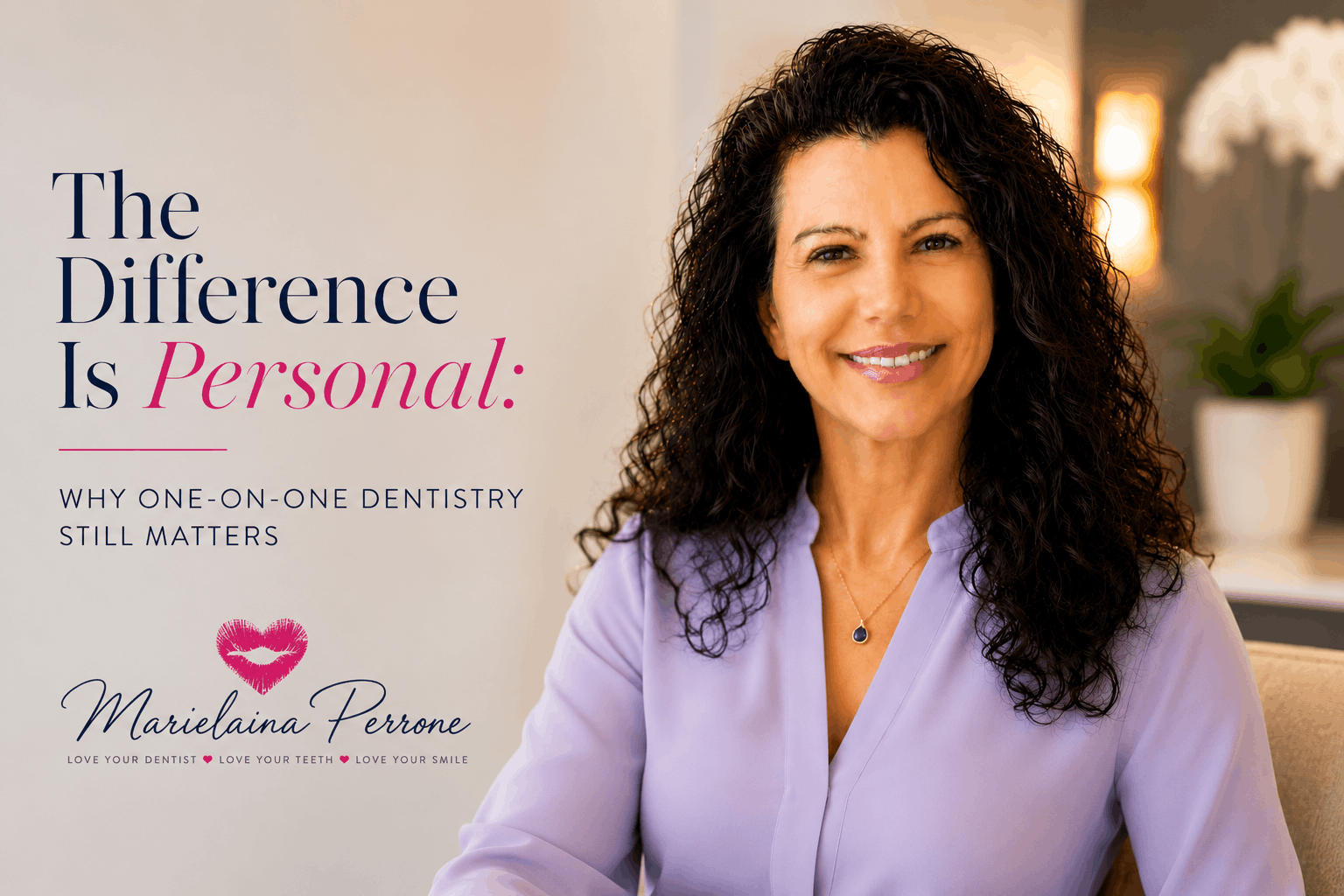
One of the things I enjoy most about implant dentistry is that it allows me to restore more than teeth.
It restores confidence.
It restores comfort.
It restores quality of life.
But I never begin by asking, “Where should we place an implant?”
Instead, I ask:
“What’s the healthiest long-term solution for this person?”
Sometimes that’s a single implant.
Sometimes it’s a full-arch restoration.
Sometimes it isn’t an implant at all.
The best treatment plan is the one that’s built around you—not around a procedure.
“Implant dentistry isn’t just about replacing teeth. It’s about restoring health, function, confidence, and the freedom to smile without hesitation.”
— Marielaina Perrone, DDS
Frequently Asked Questions
Am I too old for dental implants?
Age alone rarely prevents implant treatment. Overall health, bone quality, and gum health are usually much more important than your age.
Can I get dental implants if I’ve been missing a tooth for years?
Often, yes. Even if bone loss has occurred, procedures such as bone grafting may make implant treatment possible.
Does osteoporosis prevent dental implants?
Not necessarily. Many patients with osteoporosis successfully receive implants, although medications and bone health should be carefully evaluated during treatment planning.
Can smokers receive dental implants?
Smoking increases the risk of implant complications and delayed healing. Quitting or reducing tobacco use significantly improves long-term success.
How do I know if I have enough bone?
A CBCT scan provides a detailed three-dimensional evaluation of your jawbone and allows precise implant planning.
How long do dental implants last?
With excellent oral hygiene, regular professional maintenance, and healthy lifestyle habits, dental implants can often function successfully for decades.
Discover Whether Dental Implants Are Right for You
Every smile is different.
That’s why every implant consultation should begin with a comprehensive examination, advanced imaging, and an honest conversation about your goals.
At Marielaina Perrone, DDS, we provide personalized dental implant evaluations for patients throughout Henderson, Green Valley, Anthem, Seven Hills, Inspirada, Las Vegas, Summerlin, and surrounding Southern Nevada communities.
Whether you’re missing one tooth or many, we’ll help you understand your options and create a treatment plan focused on long-term health, function, and naturally beautiful results.
Because the best implant isn’t simply the one that’s placed.
It’s the one that’s planned with your future in mind.
About Marielaina Perrone, DDS
Dr. Marielaina Perrone is a highly respected and experienced dentist in Henderson, Nevada. She has over twenty years of expertise in providing quality dental care to her patients. She graduated from Stony Brook University School of Dental Medicine and has completed advanced training in cosmetic dentistry, implant dentistry, and orthodontics. Her dedication to excellence has earned her several awards and recognitions in the field of dentistry.
Dr. Perrone is committed to staying up-to-date with the latest advancements in dentistry and continuing education to provide the best possible care for her patients.
Dr. Perrone’s patient-centered approach is not just a philosophy, but a way of life. She believes in creating personalized treatment plans that cater to each individual’s unique needs and preferences. Her gentle and compassionate demeanor ensures a comfortable and relaxed patient atmosphere during their dental appointments.
Dr. Perrone’s dedication to her community extends beyond the walls of her practice. She enjoys spending time with her family, traveling, and cooking. But she also generously volunteers her time and expertise to various charitable organizations, fostering a sense of community and care in Henderson, Nevada.

Reviewed for Clinical Accuracy
This article has been written and clinically reviewed by Marielaina Perrone, DDS, to ensure it reflects current evidence-based dentistry and the personalized philosophy of care practiced at her Henderson, Nevada office.
Last Reviewed: August 2026